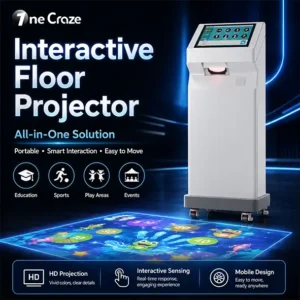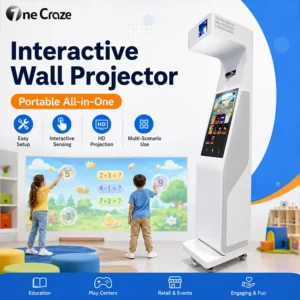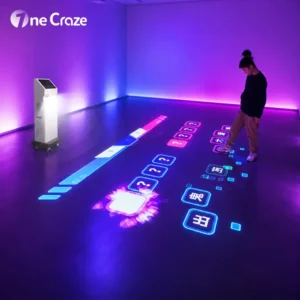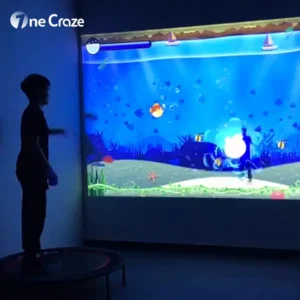
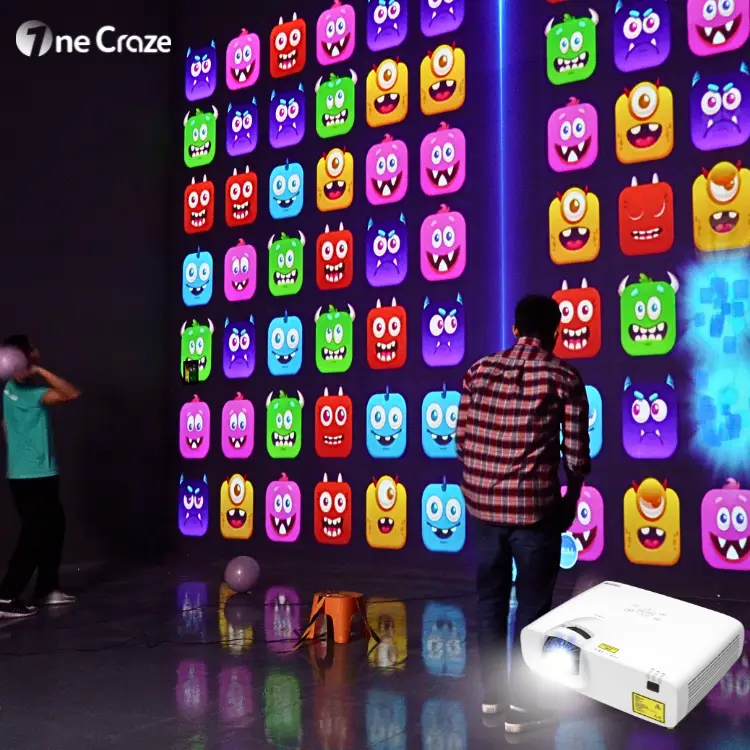
An interactive sports wall is a broad category of equipment that connects physical activity with digital games. A reaction wall describes a more specific experience: responding to targets or prompts, often against a timer. The terms overlap—a projection-based sports wall can include reaction games alongside other activities.
The useful buying comparison is not the name alone. Compare the display technology, accepted player inputs, included games and information the system actually measures. This guide helps gym owners, indoor entertainment operators and distributors turn a request for a “multi-sport reaction wall” into a clear equipment brief.
What Is the Difference Between a Sports Wall and a Reaction Wall?
Think of “sports wall” as the wider product category and “reaction wall” as a possible use. A ball-throwing target game can fit both descriptions. However, a supplier may also use “reaction wall” for illuminated physical panels or touch targets rather than a projected game.
- Interactive sports wall: specify the activities you need, such as approved ball throws, kicks or touch-based games.
- Ball throwing reaction wall: specify how targets appear, how hits are registered and whether play is timed, scored or turn-based.
- Multi-sport projection system: request the named games and permitted equipment for each activity, not only a list of sport-themed graphics.
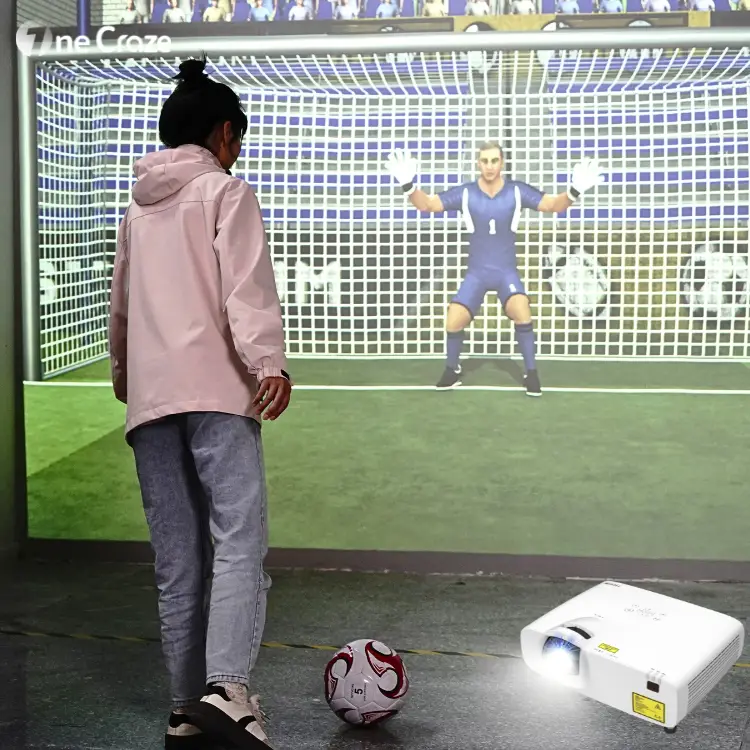
These names are useful search terms, but they are not interchangeable specifications. A football scene does not establish support for every football, shot speed or training drill.
Projection Wall or Illuminated Target Panels?
Projection-Based Interactive Sports Walls
A projection system combines a projector, detection hardware, computing and compatible software. It displays the game on a suitable surface and connects the approved physical inputs to that game. The image can contain changing scenes and targets, but the content and interaction modes depend on the supplied package.
Evaluate the wall finish, image dimensions, projector position, room lighting and sensing coverage together. Confirm whether the quotation includes the projector and mounting hardware or expects you to supply them locally.
Illuminated Panel Reaction Walls
Some systems use physical illuminated targets instead of projected imagery. For example, Lappset’s Sutu product description identifies 16 illuminated panels that respond to ball contact. This illustrates a different hardware format; it is not a description of OneCraze’s projection equipment.
For a panel system, compare target layout, permitted impact types and component replacement requirements. For projection, compare image visibility and alignment as well as interaction performance. Neither format should be assumed to support all balls, all environments or the same software functions.
Choose the Activity Before Comparing the Hardware
Start with the visitor experience you want to offer. The following are planning examples, not a claim that every game package includes all three formats.
Timed Target Challenges for a Gym or Activity Studio
If the goal is a short reaction challenge, prioritize clear start and finish cues, understandable scoring and repeatable settings. Establish whether participants take turns or play together. A coach or instructor should be able to explain the rules without navigating a long menu.
Varied Ball Games for a Family Entertainment Center
For an indoor leisure venue, compare the actual variety of actions and rules. Several visual themes using the same input may offer a different experience from several distinct games. Check how staff switch activities, what instructions visitors see and how the next group starts.
A Repeatable Demonstration Package for a Distributor
A distributor needs a configuration that can be shown and explained consistently. Agree on the hardware version, demonstration games, approved balls and setup instructions. Keep optional functions separate from the standard package so the demonstration does not promise features absent from the delivered unit.
Verify Ball Compatibility and Tracking with the Same Test
A useful demonstration matches the intended activity. Send the supplier the proposed ball type, size and material, the player action and the planned operating distance. Agree on the wall surface and conditions used for the test.
Then ask for a short, repeatable demonstration:
- Single-input test: demonstrate the agreed action at representative targets across the intended playing area, including its edges.
- Miss and rebound test: show how the game responds to a missed target, a rebound and an input outside the active game area.
- Group-play test: if required, demonstrate the quoted simultaneous player mode rather than only alternating turns.
- Operator test: have staff change games, end a session and follow the documented recovery procedure.
Record the game version, ball, lighting and layout used. Agree on acceptance criteria with the supplier rather than inventing a universal accuracy or response-time threshold. A video showing one successful hit is not enough to compare tracking across two different offers.
For a ball-pit installation rather than a sports activity zone, use our interactive ball wall retrofit guide to review the different layout and equipment questions.
Game Scores Are Not Automatically Sports Performance Measurements
A reaction game may display points, a countdown or the number of targets hit. Those features do not establish that it measures reaction time, ball speed or movement accuracy as a validated training instrument.
If measurement matters to your project, request precise definitions:
- Reaction time: what event starts the clock and what detected event stops it?
- Ball speed: is speed directly measured, estimated or simply represented by a game animation?
- Accuracy: does the result describe a target hit, a location on the wall or another quantity?
- Player results: can data be saved, exported or compared, and under what account and software terms?
For entertainment, an easy-to-understand score may be sufficient. For a sports training wall, ask for evidence supporting the particular measurement you need. Do not present ordinary game scores as proof of improved athletic performance.
What Does a Manufacturer’s Sports Wall Package Cover?
OneCraze’s OmniBall interactive ball sports reaction wall is a projection-based option for commercial venues. Its published configuration lists game software, an integrated server, projector and sensing components. Confirm the current game list and supported activities in the project quotation.
Separate the commercial proposal into equipment, software rights, site work and support. Identify who supplies the impact surface, ball containment where required, mounting, cables and installation labour. The projection equipment package should not be mistaken for a finished sports room.
For several venues or resale projects, also agree on configuration changes, licence allocation per machine and replacement-part responsibilities. OneCraze’s multi-site digital sports wall sourcing guide covers how repeat orders and site-specific installation requirements can be documented separately.
A Clear Inquiry for a Multi-Sport Reaction Wall Supplier
Instead of asking only for the “best interactive wall price,” use a brief that lets the manufacturer evaluate the actual activity. Adapt this example:
We need an indoor projection-based sports wall for a commercial activity venue. Our priority is timed ball-target games using the ball type shown in our photos. Please confirm the supported player mode, included game names, wall and room requirements, complete equipment list, software terms and installation responsibilities. We also need a demonstration of scoring and staff operation before approving the configuration.
Add wall dimensions, ceiling height, room photos, lighting conditions, target audience, quantity and destination country. If kicking, hand touch, multilingual menus or saved results are essential, list each as a separate requirement rather than assuming it follows from “multi-sport.”
FAQ: Interactive Sports and Reaction Walls
Is a Reaction Wall Always an LED Wall?
No. The term may refer to projected targets, illuminated panels or other responsive targets. State the required display method and player action when requesting a quotation.
Can One Sports Wall Support Football and Ball-Throwing Games?
Possibly, if the selected hardware, software, balls and surface support both activities. Require the relevant games and actions to be demonstrated; a sport-themed menu icon alone does not prove compatibility.
Does a Touchscreen on the Machine Make the Play Wall Touch-Sensitive?
No. A cabinet touchscreen may be an operator interface. The play wall’s supported interactions depend on its sensing hardware and software. Ask separately about hand touch, ball impacts and body-motion inputs.
Can an Interactive Sports Wall Measure Reaction Time?
Only if the selected software provides that measurement. Confirm what is measured, how it is calculated and what evidence supports its accuracy. A timer or points total is not automatically a reaction-time result.
What Should Be Included in a Supplier Comparison?
Compare the same game list, input types, display arrangement, player mode and installation scope. Include software terms, delivery, training and support so a hardware-only quote is not compared with an installed package.
Discuss a Projection-Based Reaction Wall Solution
Send OneCraze your venue brief and intended games to discuss equipment selection and a manufacturer quotation. You can also explore our interactive projection machine range if you are still choosing between floor, wall and other active-play formats. Define what visitors should do first, then select the system that demonstrates those actions.